
Blog

  • Mastering Feature Transformation in Data Science: Key Techniques and Application

    Mastering Feature Transformation in Data Science: Key Techniques and Application

    In AI and Data Science, the efficacy of machine learning models heavily relies on the quality of features fed into them. Raw data seldom fits the mould required for optimal model performance. Feature transformation steps into mould, refine, and enhance the features, ensuring that models can extract meaningful patterns effectively. But what exactly is it, and why is it so important?

    In this blog, we’ll delve deeper into the technical aspects of feature transformation, exploring its necessity, usage, and a spectrum of techniques across the data science lifecycle.


    Why Transform?

    Imagine training a model to predict house prices. If one house has a price of 1 million and another is priced at 10 thousand, the model will be heavily influenced by this massive difference, potentially ignoring other important features. Feature transformation helps level the playing field by bringing all features to a similar scale or distribution. This allows the model to focus on the underlying relationships between the features, rather than just their magnitudes.


    Beyond Scaling

    Feature transformation goes beyond just scaling. Raw datasets often present challenges such as non-linearity, skewed distributions, and high dimensionality. These challenges can impede the performance of machine learning models. Feature transformation addresses these issues by:

    • Normalization and Scaling: Ensuring features are on a similar scale prevents dominance by features with larger magnitudes.
    • Handling Non-Linearity: Transforming features to capture non-linear relationships, allowing linear models to fit complex data patterns better.
    • Dealing with Skewed Distributions: Normalizing distributions to ensure model stability and robustness, particularly for algorithms sensitive to data distribution.
    • Dimensionality Reduction: Reducing the number of features while preserving essential information, mitigating the curse of dimensionality, and enhancing model interpretability.
    • Creating new features: Feature engineering involves combining existing features to create entirely new ones that might be more predictive. For example, you could create a new feature “time since last purchase” from purchase date data.

    Techniques of Feature Transformation:

    • Normalization and Scaling:Min-Max Scaling: Rescales features to a fixed range, typically between 0 and 1.Z-score Normalization: Standardizes features by subtracting the mean and dividing by the standard deviation, resulting in a distribution with zero mean and unit variance.Robust Scaling: Scales features using median and interquartile range to mitigate the influence of outliers.
    • Handling Non-Linearity:Polynomial Features: Generates polynomial combinations of features up to a specified degree, capturing non-linear relationships in the data.Kernel Methods: Transforms data into higher-dimensional spaces using kernel functions, allowing linear models to capture complex patterns.Basis Function Expansions: Expands the feature space by applying basis functions such as sine, cosine, or radial basis functions.
    • Dealing with Skewed Distributions:Logarithmic Transformation: Applies the logarithm function to skewed features to reduce skewness and make the distribution more symmetric. Box-Cox Transformation: Employs a family of power transformations to stabilize variance and normalize the distribution.

    Dimensionality Reduction:

    • Principal Component Analysis (PCA): Orthogonally transforms the data into a new set of uncorrelated variables (principal components) while retaining as much variance as possible.
    • Singular Value Decomposition (SVD): Factorizes the feature matrix into singular vectors and singular values, facilitating dimensionality reduction.
    • t-Distributed Stochastic Neighbor Embedding (t-SNE): Reduces dimensionality while preserving local structure by mapping high-dimensional data to a low-dimensional space.

    Choosing the Right Tool

    There’s no one-size-fits-all approach to feature transformation. The best technique depends on your data and the model you’re using. Here are some things to consider:

    • Data distribution: Analyze the distribution of your features to identify skewness or outliers.
    • Model requirements: Some models, like linear regression, have assumptions about the data distribution. Feature transformation can help meet these assumptions.
    • Domain knowledge: Understanding the meaning of your features can help you choose appropriate transformations.

    Accelerated Feature Transformations with DSW UnifyAI

    UnifyAI is an end-to-end Enterprise-grade GenAI platform that combines all the necessary components for seamless AI/ML implementation. By eliminating disjointed tools and accelerating processes, UnifyAI provides a unified and cohesive environment for end-to-end AI/ML development, from experimentation to production. With acceleration at its core, UnifyAI reduces the time, cost, and effort required to experiment, build, and deploy AI models, enabling organizations to scale their AI initiatives effectively across the organization.

    DSW UnifyAI’s advanced feature transformation capabilities streamline the entire data preprocessing pipeline, from data ingestion to feature storage. Its robust data ingestion toolkit effortlessly handles diverse datasets, while a rich library of transformation functions and algorithms efficiently preprocesses data within the platform. Features are automatically extracted, transformed, and stored in the centralized Feature Store, promoting consistency and collaboration across projects and teams.

    Additionally, the UnifyAI AutoAI functionality further accelerates the feature engineering process by autonomously selecting and applying optimal transformations based on the given model type. This integration of advanced feature engineering capabilities directly within the platform empowers users to derive actionable insights more efficiently, driving innovation and competitive advantage from their data.


    Conclusion

    Feature transformation is not just a preprocessing step; it’s a fundamental aspect of the data science lifecycle. By mastering the technical nuances of feature transformation techniques, data scientists can unlock the true potential of their data and build robust machine learning models capable of extracting actionable insights from complex datasets. Furthermore, the integration of accelerated feature transformation, as provided by DSW UnifyAI, significantly streamlines the process, allowing organizations to accelerate their AI endeavors and derive insights more efficiently. Accelerated feature transformation empowers data scientists to focus on higher-level tasks, such as model interpretation and optimization, ultimately enhancing innovation and competitiveness in today’s data-centric world.

    Want to build your AI-enabled use case seamlessly and faster with UnifyAI?

    Book a demo today!

    Authored by Yash Ghelani, MLOps Engineer at Data Science Wizards (DSW), this article explores the pivotal role of feature transformation in optimizing machine learning models, emphasizing the importance of mastering feature engineering techniques and integrating accelerated transformations to streamline the AI journey for enhanced innovation and competitiveness.


    About Data Science Wizards (DSW)

    Data Science Wizards (DSW) is a pioneering AI innovation company that is revolutionizing industries with its cutting-edge UnifyAI platform. Our mission is to empower enterprises by enabling them to build their AI-powered value chain use cases and seamlessly transition from experimentation to production with trust and scale.

    To learn more about DSW and our groundbreaking UnifyAI platform, visit our website at www.datasciencewizards.ai/. Join us in shaping the future of AI and transforming industries through innovation, reliability, and scalability.


  • Unveiling the Crucial Role of Model Versioning and Continuous Experimentation of AI/ML Use Cases in Production

    Unveiling the Crucial Role of Model Versioning and Continuous Experimentation of AI/ML Use Cases in Production

    In the ever-evolving landscape of software and data science development, staying ahead of the curve demands a commitment to constant iteration and improvement. As new ideas emerge, technologies evolve, and user needs shift, the ability to adapt quickly becomes paramount. In this ever-changing environment, two powerful concepts emerge as linchpins of progress: model versioning and continuous experimentation.


    What is Model Versioning: Remembering Your Milestones

    Imagine you’re a data scientist, meticulously crafting a machine-learning model. You train, test, refine it – and finally, you have a version that performs admirably. But what happens when you tweak the algorithm or introduce new data to it? How do you ensure you can go back to the previous version if needed?

    This is where model versioning comes in. It’s the systematic practice of assigning unique identifiers to different iterations of your model. Each version represents a specific stage in its development, allowing you to track changes, understand its evolution, and, crucially, reproduce past results.

    At its core, model versioning is akin to maintaining a detailed history of a model’s evolution. It’s about more than just saving different iterations of a machine learning model; it’s a disciplined approach to tracking changes, documenting improvements, and preserving the context behind each modification. Just as software developers use version control systems like Git to manage code changes, data scientists leverage model versioning to maintain a clear lineage of their models. This practice not only facilitates collaboration and reproducibility but also enables teams to roll back to previous iterations if needed—a crucial feature in an iterative development process.

    Model versioning brings several key benefits to the table:

    • Clear Tracking: With model versioning, you can keep a clear record of changes made to your models over time. It’s like having a detailed history book that shows every tweak and improvement you’ve made along the way.
    • Reproducibility: Ever tried to recreate the magic of an old experiment? Versioning allows you to revisit past models with exact configurations, ensuring the validity of your findings.
    • Collaboration: When multiple data scientists work on a model, versioning prevents confusion and conflicts. Everyone knows exactly which version they’re working with and can easily switch between them.
    • Debugging and Rollbacks: Did a new model update unexpectedly tank performance? Versioning lets you quickly revert to a previous, stable version while you diagnose the issue.

    Understanding Continuous Experimentation in the ML Lifecycle

    Complementing model versioning is the concept of continuous experimentation—a methodology rooted in the ethos of agility and learning. Continuous experimentation is about embracing a culture of curiosity and hypothesis testing, where every iteration serves as an opportunity to learn and refine. Data scientists conduct experiments to explore different hypotheses, test various model configurations, and validate assumptions—all to improve model performance and drive innovation. By systematically experimenting with different approaches, teams uncover insights, identify best practices, and accelerate the pace of innovation.

    Traditionally, ML model development followed a linear path: gather data, train a model, evaluate its performance, and deploy it into production. However, this approach often falls short in the face of real-world complexity and changing requirements. Continuous experimentation flips this paradigm by treating ML model development as an iterative process characterized by constant learning and improvement.

    At its core, continuous experimentation involves:

    • Iterative Model Training: Rather than training a model once and considering the job done, continuous experimentation emphasizes repeated model training with variations in algorithms, hyperparameters, and data preprocessing techniques.
    • Evaluation and Feedback Loop: Continuous experimentation requires rigorous evaluation of model performance using metrics relevant to the problem domain. Based on these evaluations, insights are gathered to refine and iterate upon the models further.
    • Versioning and Tracking: Keeping track of model versions, experiment configurations, and results is essential for reproducibility and accountability. This enables teams to trace back to specific experiments and understand the rationale behind model decisions.

    Advanced Model Versioning and Continuous Experimentation with UnifyAI – the Enterprise AI Way

    UnifyAI, an Enterprise-grade GenAI platform, helps to simplify building, deploying, and monitoring AI-enabled use cases. Together, with its capabilities of end-to-end machine learning lifecycle management, UnifyAI supports experiment tracking, model packaging, deployment, and model registry.

    UnifyAI also offers an advanced solution for managing model versioning and continuous experimentation, equipped with features tailored to address challenges such as data drift, model drift, and lineage tracking. Here’s how the UnifyAI Platform enhances the ML development lifecycle:

    • Advanced Model Versioning: With UnifyAI Platform, model versioning is elevated to a new standard. It provides robust capabilities for monitoring and managing model versions over time, allowing users to easily compare performance, track changes, and ensure reproducibility.
    • Continuous Experimentation with Data Drift Detection: UnifyAI Platform enables continuous experimentation by offering tools to detect and adapt to data drift. This ensures that models remain accurate and reliable even in dynamic environments where the underlying data distribution may change over time.
    • Model Drift Detection and Remediation: UnifyAI Platform includes capabilities for detecting and remediating model drift. It alerts users when model performance degrades due to changes in the business environment or underlying patterns in the data, allowing proactive measures to maintain optimal performance.
    • Lineage Tracking for Accountability and Transparency: UnifyAI Platform provides robust lineage tracking features, offering a clear audit trail of model development and deployment. This promotes accountability, transparency, and compliance by documenting every step of the ML lifecycle, from data ingestion to model deployment.
    • Integration with Advanced Automation and Monitoring: The UnifyAI Platform seamlessly integrates with advanced automation and monitoring features, streamlining tasks such as data ingestion, model training, and deployment. It also includes advanced monitoring and alerting capabilities to ensure ongoing model performance and reliability.

    With the UnifyAI Platform, organizations can harness the power of model versioning and continuous experimentation to build, deploy, and maintain high-quality machine learning models efficiently and with confidence.


    Conclusion

    In today’s era of continuous experimentation, effective model versioning and MLOps practices are essential tools for data scientists and ML engineers. By systematically tracking model iterations and leveraging automated MLOps pipelines, organizations can streamline experimentation cycles, accelerate model development, and deploy robust ML solutions with confidence. As organizations continue to invest in ML capabilities, embracing model versioning and MLOps practices will be crucial for staying competitive in the rapidly evolving ML landscape. UnifyAI emerges as a game-changer, poised to revolutionize how users navigate these challenges.


    Want to build your AI-enabled use case seamlessly and faster with UnifyAI?

    Book a demo, today.

    Authored by Jaidatt Bhadsawale, a seasoned Data Scientist at DSW (Data Science Wizards), this blog delves into the pivotal concepts of model versioning and continuous experimentation in the realm of machine learning development and maintenance in production environments.


    About Data Science Wizards (DSW)

    Data Science Wizards (DSW) is a pioneering AI innovation company that is revolutionizing industries with its cutting-edge UnifyAI platform. Our mission is to empower enterprises by enabling them to build their AI-powered value chain use cases and seamlessly transition from experimentation to production with trust and scale.

    To learn more about DSW and our groundbreaking UnifyAI platform, visit our website at wordpress.datasciencewizards.ai/. Join us in shaping the future of AI and transforming industries through innovation, reliability, and scalability.

  • Elevating ML Workflows: The Power of Feature Stores in MLOps

    Elevating ML Workflows: The Power of Feature Stores in MLOps

    In today’s landscape, the integration of machine learning (ML) models into our daily lives has become increasingly prevalent. From predictive text on our smartphones to personalized recommendations on streaming platforms, ML algorithms are ubiquitous. However, behind the seamless operation of these models lies a complex infrastructure known as MLOps.

    MLOps, short for Machine Learning Operations, refers to the set of practices and tools designed to streamline and operationalize machine learning workflows efficiently. It encompasses various components, including model management tools, Continuous Integration and Continuous Deployment (CI/CD) pipelines, and, perhaps most importantly, feature stores.


    Understanding the Role of Feature Stores

    At the heart of MLOps lies the management of features, the key variables or attributes used to make predictions in ML models. Feature engineering, the process of selecting, transforming, and deriving new features from raw data, is a critical aspect of building robust ML models. However, manual feature engineering can be both complex and time-consuming, leading to challenges in maintaining consistency, reproducibility, and scalability across different ML applications.

    This is where feature stores come into play. A feature store serves as a centralized repository for storing, managing, and serving data features to ML models. By providing a single source of truth for features, feature stores enable organizations to overcome common challenges faced in MLOps, such as:

    • Complex and time-consuming feature engineering processes
    • Maintaining consistency and standardization of features
    • Difficulties in reproducing ML experiments across different environments
    • Challenges in sharing and collaborating on features among teams or stakeholders
    • Performance issues during data feature serving for inference or real-time predictions
    • Control over data consistency, quality, and scalability

    UnifyAI’s Feature Store

    Among the myriad solutions available for managing feature stores, UnifyAI stands out for its comprehensive feature management capabilities integrated within its Enterprise Grade GenAI platform. UnifyAI offers an efficient and scalable feature store alongside other essential MLOps components, providing organizations with a holistic solution for feature management in ML applications.

    UnifyAI is an end-to-end Enterprise-grade GenAI platform that combines all the necessary components for seamless AI/ML implementation. By eliminating disjointed tools and accelerating processes, UnifyAI provides a unified and cohesive environment for end-to-end AI/ML development, from experimentation to production. With acceleration at its core, UnifyAI reduces the time, cost, and effort required to experiment, build, and deploy AI models, enabling organizations to scale their AI initiatives effectively across the organization.


    Key Benefits of UnifyAI’s Feature Store

    • Centralized and Unified Feature Storage: UnifyAI’s feature store provides a centralized repository where organizations can store, manage, and serve data features to ML models, ensuring consistency across different applications.
    • Feature Versioning and Lineage: With UnifyAI’s feature store, organizations can easily track the version and lineage of data features, ensuring reproducibility and consistency in ML model training and serving.
    • Efficient Feature Serving: The mechanism of UnifyAI’s feature store enables high-throughput and low-latency access to data features during training, testing, and inference, optimizing performance.
    • Data Consistency and Integrity: UnifyAI’s feature store includes mechanisms for enforcing data consistency and integrity through validation, quality checks, and transformations, ensuring accurate and reliable feature usage.
    • Collaboration and Data Sharing: UnifyAI’s feature store facilitates collaboration and data sharing among data scientists, ML engineers, and other stakeholders, reducing duplicate efforts and promoting cross-functional collaboration.
    • Scalability and Performance: Designed to handle large-scale feature datasets efficiently, UnifyAI’s feature store allows organizations to scale their ML systems without sacrificing performance.
    • Reproducibility and Auditability: By reproducing ML experiments with the exact set of features used during model training, UnifyAI’s feature store enhances auditability, compliance, and regulatory requirements.
    • Real-time Feature Updates: UnifyAI’s feature store supports real-time feature updates, enabling organizations to continuously serve fresh features to their ML models as new data arrives.

    Conclusion

    In conclusion, UnifyAI’s feature store offers a comprehensive solution to the challenges faced in MLOps, providing organizations with the tools they need to streamline feature management in ML applications. By leveraging UnifyAI’s feature store, organizations can create centralized, scalable, and efficient solutions for managing, sharing, and serving features, enhancing collaboration, reproducibility, and overall efficiency in ML operations.


    Want to build your AI-enabled use case seamlessly and faster with UnifyAI?

    Book a demo today.

    Authored by Sandhya Oza, Cofounder & Chief Project Officer at Data Science Wizards, where we discussed the vital role of feature stores in end-to-end MLOps. Additionally, it introduces the UnifyAI Feature Store, which can help organizations manage & serve features efficiently.


    About Data Science Wizards (DSW)

    Data Science Wizards (DSW) is a pioneering AI innovation company that is revolutionizing industries with its cutting-edge UnifyAI platform. Our mission is to empower enterprises by enabling them to build their AI-powered value chain use cases and seamlessly transition from experimentation to production with trust and scale.

    To learn more about DSW and our groundbreaking UnifyAI platform, visit our website at www.datasciencewizards.ai/. Join us in shaping the future of AI and transforming industries through innovation, reliability, and scalability.

  • Monitoring in Data Science Lifecycle: Types, Challenges & Solutions

    Monitoring in Data Science Lifecycle: Types, Challenges & Solutions

    Monitoring in data science project lifecycles refers to the continuous observation, assessment, and management of various aspects of a project to ensure its success, effectiveness, and sustainability. It involves tracking key performance indicators, data quality, model performance, and system behaviour throughout different stages of the project.


    What is Monitoring in Data Science project Lifecycle?

    Monitoring is essential for detecting issues, identifying opportunities for improvement, and making informed decisions to optimize project outcomes.

    In a typical data science project lifecycle, monitoring activities can be categorized into several key areas:

    Data Quality Monitoring: This involves continuously assessing the quality and integrity of data inputs, including identifying anomalies, errors, or missing values. Data quality monitoring ensures that the data used for analysis and modelling are accurate, reliable, and representative of the underlying phenomena.

    Model Performance Monitoring: Monitoring model performance involves tracking key metrics such as accuracy, precision, recall, F1 score, and others relevant to the specific problem domain. It allows data scientists to evaluate how well the model is performing on unseen data and whether it meets the desired performance criteria.

    Concept Drift Detection: Concept drift occurs when the statistical properties of the target variable or input data change over time. Monitoring for concept drift involves comparing model predictions with actual outcomes and detecting shifts in the underlying data distribution. This helps ensure that models remain relevant and effective in dynamic environments.

    Resource Utilization Monitoring: Monitoring resource utilization involves tracking the consumption of computational resources such as CPU, memory, and storage. It ensures that the project infrastructure can efficiently handle processing demands and helps identify potential bottlenecks or inefficiencies.

    Real-Time Monitoring: Real-time monitoring involves continuously monitoring project components and processes in real-time to detect and respond to issues promptly. It enables proactive problem identification and mitigation, minimizing the impact on project outcomes.

    Compliance and Governance Monitoring: Monitoring for compliance and governance involves ensuring that the project adheres to regulatory requirements, ethical standards, and organizational policies. It includes tracking model behaviour, data usage, and decision-making processes to ensure transparency, fairness, and accountability.

    Feedback and Iteration: Monitoring also facilitates a feedback loop for continuous improvement and iteration. By analyzing monitoring data and insights, data scientists can identify areas for optimization, refine models, and make iterative improvements to enhance project outcomes over time.

    Overall, monitoring is integral to the success of data science projects, enabling data scientists and project stakeholders to effectively manage risks, optimize performance, and achieve desired outcomes throughout the project lifecycle.


    Challenges in Monitoring

    When it comes to implementing real-time monitoring for data science projects, several coding challenges arise:

    Low Latency Processing: Writing code that can process incoming data streams with minimal latency is crucial for real-time monitoring. This often involves optimizing algorithms and data structures for efficient processing.

    Scalable Architecture: Developing code for a scalable monitoring system requires careful consideration of distributed computing principles. This includes writing code that can run across multiple nodes or containers and can handle increasing data volumes without performance degradation.

    Data Streaming Handling: Implementing code to handle data streaming involves utilizing libraries or frameworks designed for real-time data processing, such as Apache Kafka or Apache Flink. This requires understanding how to work with data streams, manage offsets, and handle fault tolerance.

    Complex Event Processing: Writing code for complex event processing involves designing algorithms to detect patterns or anomalies in real-time data streams. This may require advanced techniques such as sliding window analysis or machine learning models deployed for real-time prediction.

    Concurrency and Parallelism: Writing code that can efficiently handle concurrency and parallelism is essential for real-time monitoring systems. This may involve using threading or asynchronous programming techniques to process multiple data streams concurrently while ensuring data consistency and integrity.

    Integration with Operational Systems: Integrating monitoring code with operational systems often requires writing code to interact with APIs, databases, or messaging systems. This involves implementing error handling, authentication mechanisms, and data serialization/deserialization.

    Security Measures: Writing code to enforce security measures involves implementing encryption, access controls, and secure communication protocols to protect sensitive data in transit and at rest. This requires integrating security libraries and frameworks into the monitoring codebase.

    Adaptability and Agility: Designing code for adaptability and agility involves following best practices such as modularization, encapsulation, and abstraction. This allows for easier maintenance, updates, and enhancements to the monitoring system as requirements evolve over time.

    Additionally, thorough testing and validation of the monitoring code are essential to ensure its reliability and effectiveness in a real-world production environment.


    Monitoring in UnifyAI:

    UnifyAI offers a comprehensive solution for organizations to host and manage all their models in one centralized platform. This platform provides various features and functionalities aimed at simplifying model deployment, monitoring, and management. One of the key features of UnifyAI is its monitoring screen, which offers real-time insights and analytics for each deployed model. Here’s how UnifyAI helps organizations in hosting, managing, and monitoring their models:

    Centralized Model Hosting: UnifyAI provides a centralized platform where organizations can host all their models, regardless of their type or complexity. This eliminates the need for organizations to manage multiple hosting environments or platforms, streamlining the deployment process.

    Model Management: UnifyAI simplifies model management by offering tools and interfaces for deploying, updating, and retiring models. Organizations can easily track the status of each model and manage its lifecycle from development to production.

    Real-Time Monitoring Screen: UnifyAI’s monitoring screen offers a user-friendly interface for monitoring the performance and behaviour of deployed models in real-time. Users, including administrators, data scientists, and business users, can access this monitoring screen to view key metrics, insights, and alerts for each model.

    Customizable Dashboards: UnifyAI allows users to customize their monitoring dashboards according to their specific requirements and preferences. Users can choose which metrics and visualizations to display, allowing them to focus on the most relevant information for their use case.

    Role-Based Access Control: UnifyAI supports role-based access control, allowing organizations to define different levels of access for administrators, data scientists, and business users. This ensures that each user has access to the monitoring features and functionalities that are relevant to their role and responsibilities.

    Alerting and Notifications: UnifyAI provides alerting and notification capabilities to alert users about potential issues or anomalies detected in deployed models. Users can configure thresholds and triggers for alerts, ensuring timely intervention and response to critical events.

    Historical Performance Analysis: In addition to real-time monitoring, UnifyAI offers historical performance analysis tools that allow users to analyze the performance of deployed models over time. This helps organizations track performance trends, identify patterns, and make data-driven decisions for model optimization and improvement.

    Overall, UnifyAI empowers organizations to efficiently host, manage, and monitor their models in one centralized platform. By providing real-time insights, customizable dashboards, role-based access control, and other advanced features, UnifyAI enables organizations to maximize the effectiveness and performance of their machine learning models while ensuring ease of use and scalability.


    Want to build your AI-enabled use case seamlessly and faster with UnifyAI?

    Book a demo, today.

    Authored by Saurabh Singh, Senior Data Scientist at Data Science Wizards, this article emphasizes the indispensable role of monitoring in developing and deploying end-to-end AI use cases, highlighting their significance in ensuring data quality, scalability, and accelerated insights in data science lifecycle.


    About Data Science Wizards (DSW)

    Data Science Wizards (DSW) is a pioneering AI innovation company that is revolutionizing industries with its cutting-edge UnifyAI platform. Our mission is to empower enterprises by enabling them to build their AI-powered value chain use cases and seamlessly transition from experimentation to production with trust and scale.

    To learn more about DSW and our ground-breaking UnifyAI platform, visit our website at www.datasciencewizards.ai/. Join us in shaping the future of AI and transforming industries through innovation, reliability, and scalability.
  • Demystifying Inference Pipelines in Data Science: From Data to Decisions

    Demystifying Inference Pipelines in Data Science: From Data to Decisions

    In data science, the journey from raw data to actionable insights involves traversing through a structured process known as an inference pipeline. This intricate mechanism encompasses various stages, each playing a crucial role in transforming data into actionable insights. In this article, let’s deep dive into the intricacies of inference pipelines, shedding light on their significance and the underlying mechanics.


    Understanding the Inference Pipeline

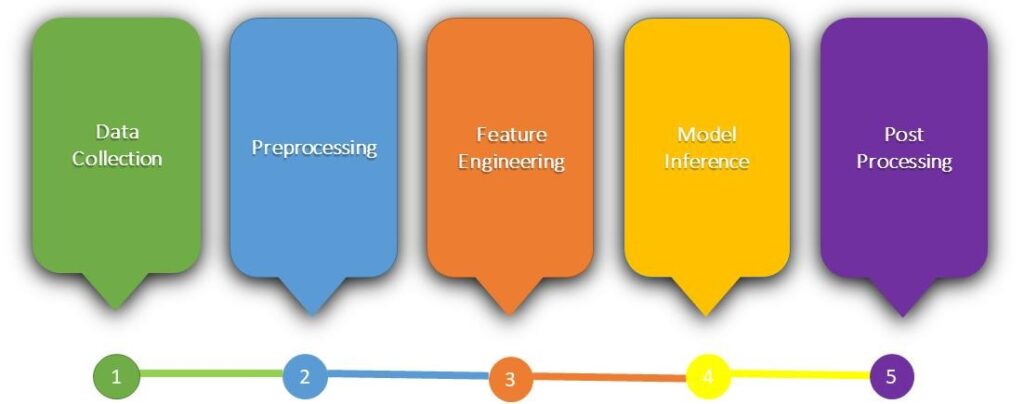
    At its core, an inference pipeline represents the orchestrated flow of operations that enable the extraction of valuable insights from data. It encapsulates the following fundamental steps:

    demystifying-inference-2

    1. Data Collection:
    The journey commences with the acquisition of data from diverse sources such as databases, APIs, sensors, or flat files. This raw data serves as the foundation for subsequent analysis and decision-making processes.

    2. Preprocessing:
    Raw data is often noisy, incomplete, or inconsistent, necessitating preprocessing steps to ensure its quality and compatibility with analytical models. Techniques like data cleaning, normalization, and handling missing values are employed to prepare the data for further analysis.

    3. Feature Engineering:
    Feature engineering involves the creation or transformation of features to enhance the predictive power of machine learning models. This step may encompass tasks such as encoding categorical variables or generating new features based on domain knowledge.

    4. Model Inference:
    The crux of the pipeline lies in applying trained models to make predictions or infer patterns from the preprocessed data. Whether it’s a classification, regression, or clustering task, the model utilizes learned parameters to generate insights that facilitate decision-making.

    5. Post Processing:
    Following model inference, post-processing techniques are employed to refine and interpret the results. This may involve thresholding probabilities, aggregating predictions, or translating numerical outputs into actionable insights.


    The Dynamics of Inference Pipelines

    Inference pipelines are not static; they evolve in response to changing data landscapes, business requirements, and technological advancements. Key considerations in optimizing these pipelines include:

    • Scalability: The pipeline should be capable of handling large volumes of data efficiently, scaling seamlessly with growing demands.
    • Flexibility: It should accommodate diverse data types, model architectures, and analytical techniques, allowing for experimentation and adaptation to evolving needs.
    • Robustness: Rigorous testing, validation, and monitoring mechanisms are essential to ensure the reliability and consistency of pipeline outputs.
    • Interpretability: Transparent models and interpretable outputs foster trust and facilitate decision-making, especially in critical domains.

    Inference Using UnifyAI Business Inference Dashboard

    UnifyAI assists organizations in smoothly transitioning their machine learning models from the experimental phase to production. However, the journey doesn’t conclude there; UnifyAI also helps with a smooth process for getting inferences using the UnifyAI Business Inference Dashboard. The UnifyAI Inference dashboard is developed in a highly optimized format to handle multiple requests simultaneously. You can even monitor the model’s performance using the UnifyAI Monitoring Dashboard.

    demstyfying-inference3

    With UnifyAI, you can obtain inference using two methods:

    • Inference with ID
    • Inference with Data

    You can utilize prediction with ID features when your data is stored in a database. In this case, you can make inferences by providing only the primary key of the data, and the rest will be handled by the UnifyAI Business Inference Dashboard.

    If your data is not stored in a database, you can opt for prediction with data features. With this feature, you don’t need to connect to any database to make inferences.

    UnifyAI gives you the ability to extract results as a single inference as well in bulk through batch inference feature.

    • Single Inference: To make a single inference, you need to provide a single ID when using prediction with ID features, or you need to provide data for a single ID when using prediction with data features.
    • Batch Inference: For batch inference, you need to provide multiple IDs using an Excel or CSV file when using prediction with ID features. Alternatively, when using prediction with data features, you need to provide data for multiple IDs using an Excel or CSV file.

    The platform also gives your a visual view of the inferences and results through the Inference Insights page on our Inference Dashboard, This includes varied insights such as total prediction distribution, feature importance, and prediction distribution by specific features, etc. Further you can even monitor the inferences of your model through the platform which helps to get a clear view of the results in one go without depending on other aspects of the use case to draw results each time from the deployed models.

    The UnifyAI Business Inference Dashboard handles all processes for you, from retrieving data from databases to performing preprocessing and feature engineering, making inferences, post-processing, and serving inferences to data scientists and business users as per requirements to derive real time decisions basis the models results.


    Conclusion

    Inference pipelines serve as the backbone of data-driven decision-making, enabling organizations to extract actionable insights from raw data. By navigating through stages of data collection, preprocessing, feature engineering, model inference, post-processing, and decision-making, these pipelines empower stakeholders to derive value and drive innovation. As data science continues to evolve, understanding and optimizing inference pipelines will remain imperative for harnessing the full potential of data in driving transformative outcomes. Furthermore, in the entire process of Data Science, UnifyAI will be the game-changer for users.


    Want to build your AI-enabled use case seamlessly and faster with UnifyAI?

    Book a demo,Today!

    Authored by Aditya Rai, Data Scientist at DSW | Data Science Wizards (DSW). He works on projects related to insurance and healthcare domains, applying machine learning and natural language processing techniques to solve business problems. He has experience in building automated data pipelines, data preprocessing, data visualization, modeling, and inference pipelines by utilizing the UnifyAI – the flagship platform of DSW.


    About Data Science Wizards (DSW)

    Data Science Wizards (DSW) is a pioneering AI innovation company that is revolutionizing industries with its cutting-edge UnifyAI platform. Our mission is to empower enterprises by enabling them to build their AI-powered value chain use cases and seamlessly transition from experimentation to production with trust and scale.

    To learn more about DSW and our groundbreaking UnifyAI platform, visit our website at www.datasciencewizards.ai/. Join us in shaping the future of AI and transforming industries through innovation, reliability, and scalability.

  • Maximizing AI Potential: The Vital Role of Data Pipelines in End-to-End AI Solutions

    Maximizing AI Potential: The Vital Role of Data Pipelines in End-to-End AI Solutions

    In the dynamic landscape of artificial intelligence (AI), data is the lifeblood that fuels innovation and drives meaningful insights. However, the journey from raw data to actionable intelligence is not a straightforward one. This is where data pipelines emerge as crucial components in the development of end-to-end AI use cases and maintaining them in the production environment to give expected outcomes. In this blog post, we’ll explore the importance of data pipelines and how they facilitate the creation of robust AI solutions across various industries. Let’s first understand the challenges.


    Navigating the Data Pipeline Dilemma: Challenges Without a Structured Framework

    • Manual data handling: Without a data pipeline, organizations are forced to handle data manually, leading to inefficiencies and errors in data processing.
    • Data Validation: Without a data pipeline, organizations struggle to ensure the accuracy, completeness, and consistency of data. Manual validation efforts are time-consuming, error-prone, and often unable to keep pace with the volume and velocity of data influx.
    • Data silos: The absence of a structured pipeline exacerbates the risk of data silos, hindering collaboration and decision-making across departments.
    • Prolonged development cycles: Development timelines are extended as data scientists grapple with manual data processing and lack the automation provided by data pipelines.
    • Compromised model performance: Models trained on outdated or incomplete data due to the lack of pipelines may yield suboptimal results, impacting decision-making and ROI.
    • Disrupted deployment processes: Deployment of AI models becomes complex and error-prone without a well-orchestrated data pipeline, leading to scalability and integration challenges.
    • Limited scalability: Organizations face difficulties in scaling AI solutions without a robust data pipeline, hindering innovation and growth potential.
    • Security risks: Absence of data pipelines may expose organizations to heightened security risks during data handling and deployment processes.
    • Compliance challenges: Ensuring regulatory compliance becomes challenging without proper data pipelines, potentially leading to legal and financial repercussions.

    Harnessing Data Pipeline Power: Solutions for Seamless AI Development

    Understanding Data Pipelines:

    Data pipelines are structured workflows that facilitate the seamless flow of data from its raw form to a refined state suitable for analysis and decision-making. These pipelines encompass processes such as data ingestion, cleaning, transformation, integration, and analysis. They serve as the backbone of AI systems, ensuring that data is processed efficiently and accurately throughout its data and model lifecycles.

    Ensuring Data Quality and Consistency:

    One of the primary functions of data pipelines is to ensure the quality and consistency of data. By implementing data validation and cleansing techniques within the pipeline, organizations can identify and rectify errors, inconsistencies, and missing values in the data. This ensures that AI models are trained on high-quality data, leading to more accurate predictions and insights.

    Facilitating Scalability and Flexibility:

    Data pipelines enable organizations to scale their AI initiatives effectively. By automating data processing tasks and streamlining workflows, pipelines can handle large volumes of data efficiently, ensuring optimal performance even as data volumes grow. Moreover, modular pipeline architectures allow for flexibility and adaptability, enabling organizations to incorporate new data sources and adapt to evolving business requirements seamlessly.

    Reduced development cycles:

    Robust data pipelines accelerate AI use case development cycles by automating repetitive tasks and enabling rapid iteration. Conversely, the absence of such pipelines prolongs development timelines, as data scientists grapple with manual data processing and model refinement. Without streamlined data pipelines, organizations struggle to keep pace with evolving market demands and competitor innovations. This lag in development not only diminishes competitive advantage but also erodes customer trust and loyalty.

    Accelerating Time-to-Insight:

    In today’s fast-paced business environment, timely insights are invaluable. Data pipelines play a crucial role in accelerating the time-to-insight by automating repetitive tasks and minimizing manual intervention. By streamlining the data processing workflow, pipelines enable data scientists and analysts to focus on deriving insights and driving value from the data rather than getting bogged down by mundane data management tasks.

    Improved Model Performance:

    Data pipelines enable the continuous feeding of fresh data into AI models, ensuring that they remain up-to-date and relevant. This ongoing influx of data leads to models that are more accurate, reliable, and capable of adapting to evolving patterns and trends.

    Added Benefit: By integrating feedback loops into data pipelines, organizations can continuously monitor model performance and make necessary adjustments in real-time. This iterative approach to model refinement enhances overall performance and ensures that AI solutions deliver optimal results.

    Enhancing Model Deployment and Maintenance:

    Data pipelines extend their utility beyond the data preparation phase and into the deployment and maintenance of AI models. Organizations can automate the end-to-end machine learning lifecycle by integrating model training, evaluation, and deployment processes into the pipeline. This ensures that models are deployed quickly and efficiently, with mechanisms in place for continuous monitoring, retraining, and optimization.


    UnifyAI Data Pipeline: Empowering Seamless Data Management

    UnifyAI, an Enterprise-grade GenAI platform, helps to simplify building, deploying and monitoring AI-enabled use cases. The key components – Data Pipeline, MLOps and Core Orchestrator—help to integrate sources and build a unified data pipeline to identify the key features and store them in the feature store. Further MLOps and Orchestrator help with model repository, deployment, and monitoring. UnifyAI is an API-driven flexible architecture providing extensive scalability and predictability to build AI-enabled use cases across the organization. AutoAI and GenAI capabilities help use case development and deployment acceleration, thereby reducing the time to production for each use case built on UnifyAI.

    UnifyAI’s Data Pipeline not only streamlines data management but also ensures robust governance, consistency, and lineage tracking. With the Data Ingestion Toolkit, organizations can maintain data integrity while also automating integration tasks to ensure consistency across diverse structured and unstructured data sources. UnifyAI supports a customized data validation layer within the Data Ingestion Toolkit, allowing organizations to implement validation checks at various stages of the pipeline, thereby enhancing data quality and reliability. The Data Aggregator serves as a centralized repository, facilitating efficient storage and management while enabling organizations to track the lineage of data from its source to its usage within the platform. Additionally, the Feature Store enhances governance by providing centralized configuration and management of features, ensuring consistency and traceability across models. Together, these components empower organizations to not only leverage their data assets efficiently but also uphold data governance standards, ensuring accuracy and reliability in AI-driven insights.

    In conclusion, data pipelines play a pivotal role in developing end-to-end AI use cases, serving as the backbone that enables organizations to extract maximum value from their data assets. By ensuring data quality, facilitating scalability, accelerating time-to-insight, and enhancing model deployment, data pipelines empower organizations to harness the full potential of artificial intelligence and drive innovation across various domains. As AI continues to evolve, the importance of robust data pipelines will only grow, making them indispensable tools for organizations striving to stay ahead in the data-driven era.


    Want to build your AI-enabled use case seamlessly and faster with UnifyAI?

    Book a demo,today.

    Authored by Sandhya Oza, Cofounder and Chief Project Officer at Data Science Wizards, this article emphasizes the indispensable role of data pipelines in developing and deploying end-to-end AI use cases, highlighting their significance in ensuring data quality, scalability, and accelerated insights.


    About Data Science Wizards (DSW)

    Data Science Wizards (DSW) is a pioneering AI innovation company that is revolutionizing industries with its cutting-edge UnifyAI platform. Our mission is to empower enterprises by enabling them to build their AI-powered value chain use cases and seamlessly transition from experimentation to production with trust and scale.

    To learn more about DSW and our ground-breaking UnifyAI platform, visit our website at www.datasciencewizards.ai/. Join us in shaping the future of AI and transforming industries through innovation, reliability, and scalability.

  • Data vs. Features: The Building Blocks of Data Science

    Data vs. Features: The Building Blocks of Data Science

    In the expansive world of AI & Data Science, where insights are derived and decisions are made based on complex analysis, two fundamental elements play a pivotal role: data and features. While they might seem similar at first glance, diving deeper reveals distinct characteristics that make them indispensable components in the domain.


    Data: The Raw Material

    Imagine data as the raw ingredients in a kitchen. You might have vegetables, flour, and spices – a vast collection of individual items. This data can come in many forms: numbers, text, images, or even sounds. It represents the unprocessed information you’ve gathered about a particular topic. It can be messy, noisy, and incomplete.

    For instance, data containing information about square footage, number of bedrooms, location, and year built can be utilized for predicting house prices for a particular area.

    Raw data can serve as the bedrock upon which analysis is built, providing the empirical evidence necessary for drawing meaningful conclusions. However, raw data, in its unprocessed form, often lacks structure and context, presenting challenges for meaningful interpretation and analysis. This is where the concept of features comes into play.


    Features: Ingredients for Success

    Now, let’s move on to features. Think of features as the specific ingredients you choose for your recipe. They are the processed pieces of data that directly influence the model’s ability to learn and predict.

    Features are the building blocks of analysis in data science. They represent the distilled essence of raw data, encapsulating specific attributes or characteristics that are deemed relevant to the task at hand. In essence, features serve as the bridge between raw data and actionable insights, transforming the abstract into the concrete.

    Here’s the key difference: not all data points are equally relevant for your analysis. Feature engineering is the process of transforming raw data into features that are informative and impactful for your specific task. This might involve:

    • Selection: Choosing only the data points most likely to influence the target variable (e.g., house price).
    • Transformation: Converting data into a format suitable for the model (e.g., one-hot encoding categorical variables).
    • Creation: Deriving new features by combining existing ones (e.g., calculating a house price per square foot).

    Advantages of Features:

    So, why are features so important? Here are a few reasons:

    • Improved Model Performance: By focusing on relevant information, features help models learn more effectively and make more accurate predictions.
    • Reduced Complexity: Feature selection helps manage the dimensionality of your data, preventing overfitting and improving model interpretability.
    • Clearer Insights: Well-defined features make it easier to understand how the model arrives at its predictions.

    Data vs. Features: Bridging the Gap

    While data and features serve distinct roles in the data science workflow, they are inherently interconnected, with each influencing the other in a symbiotic relationship. Data provides the raw material from which features are derived, while features, in turn, shape the analytical models and insights generated from the data.

    The distinction between data and features lies in their level of abstraction and utility. Data represents the raw observations and measurements collected from the real world, while features encapsulate specific aspects of the data that are relevant for analysis. By transforming raw data into meaningful features, data scientists can unlock the latent insights hidden within the data, enabling informed decision-making and actionable outcomes.

    In conclusion, data and features are essential components of the data science toolkit, each playing a crucial role in the process of extracting insights from raw data. While data provides the foundation upon which analyses are built, features serve as the means of transforming data into actionable insights. By understanding the distinction between data and features and harnessing their complementary strengths, data scientists can unlock the full potential of data-driven decision-making in the modern era.


    UnifyAI Feature Store: Your Organized Kitchen

    Revolutionizing the AI/ML journey, UnifyAI seamlessly navigates every stage, from data integration to deployment and monitoring. UnifyAI streamlines the entire development of your AI/ML value chain use cases, offering an efficient and predictable pathway with reduced operational costs and time-to-production.

    Imagine a kitchen where all your ingredients are meticulously labeled, stored, and easily accessible. That’s the power of a feature store in data science. UnifyAI feature store is a centralized repository for managing the entire lifecycle of features. It acts like a well-organized pantry for your machine-learning models.


    Here’s how a UnifyAI Feature Store is a game-changer:

    • Consistency: Ensure all models use the same versions of features, preventing training-serving skew and improving model reliability.
    • Efficiency: Saves time and resources by eliminating redundant feature computation across projects.
    • Collaboration: Fosters collaboration by providing a central location for data scientists to share and discover reusable features.
    • Governance: Maintains data quality and lineage by tracking how features are derived and ensuring they meet defined standards.

    By incorporating a feature store into your data science workflow, you can streamline feature management, improve model performance, and accelerate the development of machine learning applications.

    UnifyAI, an end-to-end enterprise GenAI platform, can help organizations solve the challenges of data, aka feature management. UnifyAI’s Feature Store enables organizations to create centralized, scalable, and efficient solutions for managing, sharing, and serving features, enhancing collaboration, reproducibility, and increasing overall efficiency in ML operations.


    Want to build your AI-enabled use case seamlessly and faster with UnifyAI?

    Book a demo,today.

    Authored by Yash Ghelani MLOps Engineer at Data Science Wizards, provide the key differences between the data and features and how they can help enhance the Data Science workflow. Additionally, it introduces the UnifyAI Feature Store, which can help organizations manage & serve features efficiently.


    About Data Science Wizards (DSW)

    Data Science Wizards (DSW) is a pioneering AI innovation company that is revolutionizing industries with its cutting-edge UnifyAI platform. Our mission is to empower enterprises by enabling them to build their AI-powered value chain use cases and seamlessly transition from experimentation to production with trust and scale.

    To learn more about DSW and our ground-breaking UnifyAI platform, visit our website at wordpress.datasciencewizards.ai/. Join us in shaping the future of AI and transforming industries through innovation, reliability, and scalability.

  • Unveiling the Challenges in Machine Learning: Concept Drift and Data Drift

    Unveiling the Challenges in Machine Learning: Concept Drift and Data Drift

    Machine learning models are powerful tools that can learn from data and make predictions or decisions. However, the effectiveness of the models in production isn’t guaranteed forever due to many factors.

    Let’s imagine a self-driving car. It is meticulously trained on a vast dataset of clear weather conditions, including sunny days, light rain, and even the occasional fog. The car’s algorithms have learned to navigate these conditions safely and efficiently. However, on a day with a sudden downpour and strong winds, the car’s sensors struggle to perceive the road markings and surrounding environment. The training data, optimized for typical weather patterns, may not be enough to ensure a safe and smooth driving experience in unexpected storms. Similarly, ML models, trained on historical data, can underperform in production when faced with unforeseen changes in the real world, leading to model drift.


    Understanding the Drifts:

    Concept Drift

    Concept drift, also known as model drift, occurs when the underlying relationship between input and output data itself changes. This means that the relationship between the input data and the output data that the model learned during training no longer holds true for the new data that the model is applied to.

    Concept drift can happen for various reasons, such as:

    • Changes in user behaviour or preferences over time.
    • Changes in environmental conditions or external factors
    • Changes in business rules or objectives
    • Changes in target variable definition.

    For example: Imagine that an ML model was trained to detect spam emails based on the content of the email. If the types of spam emails that people receive change significantly, the model may no longer be able to detect spam accurately. Here, the concept of “spam” has evolved.

    Data Drift

    Data drift, also known as covariate shift, occurs when the distribution of the input data that an ML model was trained on differs from the distribution of the input data that the model is applied to in production. This can manifest in various ways, such as changes in the distribution of features (i.e., how the data points are spread out), the emergence of new features, or the disappearance of existing features.

    Data drift can happen for various reasons, such as:

    • Changes in data collection methods or sources
    • Changes in data quality or preprocessing
    • Changes in user behaviour or preferences
    • Changes in business logic

    For example: A model was trained to predict customer churn based on purchase patterns. If new competitors emerge or customer preferences evolve, the data distribution (i.e., how the data points for factors like purchase frequency and amount are spread out) changes. This throws off the model’s predictions, as it was trained on a different data landscape.

    challenges-machine-learning2

    The Impact of Drifts:

    Unidentified and unaddressed drift can lead to:

    • Reduced Accuracy: Predictions become unreliable, impacting business decisions and the user experience.
    • Negative Consequences: In critical applications, like fraud detection or medical diagnosis, drift can have significant real-world consequences.
    • Loss of Trust: Users may lose trust in the system if it consistently delivers inaccurate or irrelevant results.
    • Missed Opportunities: Drift can prevent models from identifying new trends or patterns, leading to missed opportunities for businesses.

    How to Detect Model Drift?

    Model drift can be a serious problem for machine learning systems that are deployed in real-world settings, as it can lead to inaccurate or unreliable predictions or decisions. Therefore, it is important to constantly monitor the performance of machine learning models over time and detect any signs of model drift.

    There are different methods and techniques to detect model drift, such as:

    • Performance metrics: Comparing the performance metrics (such as accuracy, precision, recall, etc.) of the model on new data with its performance on historical data or a baseline.
    • Statistical tests: Applying statistical tests (such as hypothesis testing, chi-square test, etc.) to compare the distributions of input data and the training data over time and check for any significant differences.
    • Drift detection algorithms: Using specialized algorithms (such as ADWIN, DDM, EDDM, etc.) that can automatically detect changes in data distributions or concepts over time and trigger alerts or actions.

    Master Drift Detection with UnifyAI

    UnifyAI is assisting organizations in smoothly transitioning their machine-learning models from the experimental phase to production. However, the journey doesn’t conclude there; maintaining vigilance over the performance of production models is crucial. UnifyAI implements regular statistical tests across all deployed models to address the data drift challenge. These tests meticulously compare the distribution of incoming inference data with the distribution of the data on which the model was originally trained. By actively identifying and addressing drift in production, UnifyAI safeguards against the degradation of models over time, ensuring sustained effectiveness and reliability of the models in real-world applications.

    To sum up, the dynamic nature of real-world environments poses a constant threat to the stability and accuracy of machine learning models. The concept and data drift phenomena highlight the need for a vigilant approach to model monitoring. By actively addressing drift in production, UnifyAI not only safeguards the models against degradation but also ensures that they remain adaptive, resilient, and reliable in the face of evolving conditions. This proactive stance not only upholds the integrity of predictions but also nurtures confidence in users, fostering trust and enabling organizations to harness the full potential of machine learning in practical, real-world applications.


    Want to build your AI-enabled use case seamlessly and faster with UnifyAI?

    Book a demo,today.

    Authored by Rahul Pal, MLOps Engineer at Data Science Wizards (DSW), sheds light on the challenges posed by model drift that emerge once the models are actively serving in production. The article also emphasizes the importance of proactive monitoring and introduces UnifyAI’s solutions to counter the drifts.


    About Data Science Wizards (DSW)

    Data Science Wizards (DSW) is a pioneering AI innovation company that is revolutionizing industries with its cutting-edge UnifyAI platform. Our mission is to empower enterprises by enabling them to build their AI-powered value chain use cases and seamlessly transition from experimentation to production with trust and scale.

    To learn more about DSW and our ground-breaking UnifyAI platform, visit our website at wordpress.datasciencewizards.ai/. Join us in shaping the future of AI and transforming industries through innovation, reliability, and scalability.

  • MLOps Unleashed: Navigating the Depths Beyond DevOps – Your Ultimate Deep Dive!

    MLOps Unleashed: Navigating the Depths Beyond DevOps – Your Ultimate Deep Dive!

    MLOps, short for Machine Learning Operations, is a set of practices, principles, and tools aimed at operationalizing and streamlining the deployment, monitoring, and management of machine learning models in production environments. It borrows concepts from DevOps and applies them to the machine learning lifecycle. However, the machine learning lifecycle is different from software development. Machine learning modelling involves solving a problem where the solution is not programmed but learned from the data. The model aims to find patterns and trends and make predictions based on the data. Software development is more focused on building applications specific to the requirements to meet user needs. ML models can be considered as a black box that can be understood by the data exploration and steps involved to create an ML model, unlike software development, where the application is a white box whose functioning can be programmed specifically to the user’s needs.

    There are differences in the two concepts, as both have different tasks but both deploy the same steps in the management cycles. The core concepts remain the same in both, such as:

    • Automation: Both heavily utilize automation to reduce manual work and improve efficiency. DevOps tools automate tasks like code building, testing, and deployment, while MLOps tools automate aspects like data pipeline management, model training, and deployment.
    • Single platform: MLOps and Dev Ops both serve as a single platform to orchestrate different ML models and software development and deployment respectively.
    • Continuous Integration and Continuous Deployment (CI/CD): The CI/CD practices enable rapid and reliable software and model delivery. CI/CD pipelines automate the process of building, testing, and deploying software and machine learning models, ensuring that changes are quickly integrated and delivered to production environments.
    • Version Control: Version control is essential in both MLOps and DevOps to track changes to code, models, configurations, and infrastructure.
    • Collaboration: Both emphasize close collaboration between different teams. In DevOps, development, operations, and security teams work together. MLOps extends this collaboration to include data scientists and machine learning engineers alongside developers and operations teams.
    • Infrastructure as Code: Infrastructure as code (IaC) is a practice where you manage and provision your IT infrastructure through machine-readable definition files, instead of relying on manual processes or physical configuration. Both MLOps and DevOps embrace the concept of IaC to manage and provision infrastructure resources programmatically.
    • Monitoring and Logging:Both emphasize the importance of monitoring the deployed applications or models. Monitoring tools are used to track metrics, detect anomalies, and generate alerts while logging tools capture and analyze system logs for troubleshooting and analysis. Both MLOps and DevOps incorporate feedback loops to continuously improve processes and systems.
    • Feedback Loops: Feedback from users, stakeholders, and automated testing is used to identify areas for improvement, prioritize enhancements, and drive iterative development and deployment cycles. By establishing a feedback loop, you can create a virtuous cycle where models constantly learn from new data and feedback, leading to continuous improvement in their accuracy and effectiveness.

    Deep Dive into the Complete MLOps Life Cycle:

    MLOPS-unleashed2

    1. Data Ingestion: The first step in any ML model development is to gather the required data. Data ingestion is the critical first step in the MLOps lifecycle, laying the groundwork for successful machine learning model development and deployment. It’s the process of acquiring, extracting, transforming, and loading (ETL) data from various sources into a usable format for machine learning models. MLOps pipelines ensure that data is ingested reliably and consistently, leading to high-quality data for model training. This translates to more accurate, reliable, and robust models. MLOps tools automate the data ingestion process, making it scalable and repeatable, reducing manual effort and human error. This allows for efficient handling of large and diverse datasets.
    2. Feature Selection and Feature Store: Once the data is available, feature selection focuses on identifying and selecting the most relevant and informative features from your raw data. By applying feature selection techniques consistently across the development lifecycle, MLOps ensures that models are trained and evaluated based on the same set of relevant features, leading to reproducible results and easier collaboration. MLOps pipelines automate feature selection tasks, such as feature pre-processing, transformation, and selection algorithms. This streamlines the development process and reduces manual effort.Feature store acts as a single source of truth for all pre-computed features, enabling centralized management, access, and sharing across different stages of the MLOps pipeline. This fosters collaboration and ensures everyone uses consistent features. By storing features pre-computed, you avoid redundant calculations during model training and serving, saving time and resources.
    3. Model Development and Experimentation: Model development and experimentation are core pillars of MLOps, focusing on the iterative process of building, testing, and refining machine learning models. MLOps integrates with experimentation frameworks that enable data scientists to run multiple experiments in parallel, and compare different model architectures, hyperparameter settings, and feature selections. This facilitates efficient exploration of the model space and rapid identification of the best-performing models. By facilitating rapid experimentation and comparison, MLOps allows teams to identify and deploy models with superior performance.
    4. Evaluation: Evaluation provides concrete metrics (e.g., accuracy, F1-score, Jaccard similarity, mean square error, tf-idf) that quantify how well the model performs on its intended task and whether it meets the necessary requirements. Evaluation helps reveal the specific areas where the model excels or needs improvement, leading to more informed decisions about model refinement or re-training. MLOps platforms provide tools for automated model evaluation as part of the model development workflow. By continually assessing and refining your models within the MLOps framework, you can ensure that your machine learning systems maintain optimal performance, deliver real business value, and evolve effectively to meet changing requirements.
    5. Model Repository/Version Control: Version control goes beyond simply extending experimentation in MLOps. MLOps tools ensure proper version control of the model code, data, and configuration files. This allows tracking changes, reverting to previous versions if needed, and maintaining a clear lineage of the model development process. By tracking and storing different versions of models and their associated results, you easily compare and analyze different experiments, helping you identify the best-performing configuration. If an issue arises with a deployed model, you easily revert to a previous version known to be stable, minimizing downtime and impact on production.
    6. Model Deployment: In the world of MLOps, model deployment marks the crucial transition point where a meticulously trained machine learning model is brought to life in a production environment, allowing it to interact with real-world data and generate valuable insights. MLOps tools package the model code, dependencies, and configuration files into standardized containers like Docker containers. This simplifies deployment across diverse environments and ensures consistency. MLOps platforms act as the orchestrator, managing the sequence of steps involved in deploying the model. MLOps leverages infrastructure as code (IaC) principles to automate the provisioning of necessary resources for running the model in production. Standardized processes ensure every deployment follows the same steps across environments, minimizing errors and promoting reliable model behavior. Automated deployments allow for easy scaling up or down of model instances based on changing workloads, ensuring optimal resource utilization and responsiveness.
    7. Model Monitoring: Model monitoring is a crucial aspect of MLOps, focusing on continuously observing and evaluating the behavior and performance of deployed machine learning models in production. Over time, model performance can degrade due to factors like data drift (changes in underlying data distribution) or concept drift (changes in the problem itself). Monitoring helps identify such issues early on, allowing for timely intervention and re-training. Monitoring helps identify potential biases that may creep into the model during training or deployment, enabling actions to mitigate them and maintain fair and responsible AI practices. By monitoring infrastructure health (CPU, memory, network usage), you identify potential bottlenecks or resource constraints that might impact model performance or even cause outages. Monitoring resource usage helps you identify over-provisioned or under-utilized resources, allowing for efficient allocation and cost optimization.
    8. Feedback Loops:In the MLOps lifecycle, feedback loops are not isolated stages but rather encompass the entire cycle, forming a continuous process that bridges the gap between development, deployment, and monitoring. Feedback loops enable the collection of feedback from various sources, including users, stakeholders, monitoring systems, and automated testing, to improve model performance and relevance. Feedback loops bridge the gap between model development, deployment, and monitoring. Insights from monitoring in production are fed back to the development stage, informing model updates and improvements. In essence, model monitoring acts as the eyes and ears in MLOps, providing insights into the model’s health and performance. Feedback loops, on the other hand, are the actionable steps taken based on those insights, forming a continuous cycle of improvement for your machine-learning models.
    9. Governance and Compliance: MLOps frameworks include mechanisms for enforcing governance policies and ensuring compliance with regulatory requirements. This includes tracking data lineage, managing access controls, and implementing security measures to protect sensitive data. MLOps frameworks offer mechanisms for granular access control to Restrict access to sensitive data based on user roles and permission and limit access to deploying, modifying, or retraining models to authorized personnel. Enforcing governance policies helps mitigate bias, ensure fairness, and promote explainability in models. Adhering to relevant regulations like GDPR and CCPA regarding data privacy and security requires robust control mechanisms. Ensuring data protection and responsible AI practices fosters public trust and transparency in the development and deployment of models.
    10. Scalability and Resource Management: MLOps systems adjust resources automatically based on the fluctuating demands of the model, optimizing resource utilization and cost efficiency. Utilizing containerization technologies like Docker (or cloud) allows packaging models and their dependencies for efficient and scalable deployment across various environments. MLOps practices ensure optimal allocation of resources like CPU, memory, storage, and network bandwidth to models in production based on their requirements. By monitoring resource utilization and scaling resources efficiently, MLOps aims to minimize infrastructure costs associated with model deployment.
    11. Documentation and Collaboration: Effective documentation and collaboration are cornerstones of a successful MLOps practice. Comprehensive documentation provides a clear record of the model development process, data lineage, and decision-making rationale. This promotes transparency and facilitates understanding of the model’s purpose, limitations, and potential biases. MLOps practices establish a consistent format and structure for documentation across all models and projects within the organization, enabling an effective communication channel. MLOps utilizes tools and frameworks that can automatically generate documentation based on code and configurations, saving time and effort.
    12. Model Retirement: In MLOps, model retirement refers to the decommissioning of a machine learning model that is no longer considered valuable or effective for its intended purpose. This is a critical stage in the MLOps lifecycle, as it ensures resources are allocated efficiently and avoids relying on outdated or underperforming models that cause potential risks associated with using outdated models, such as inaccurate predictions or ethical concerns, leading to overall cost reduction. By focusing resources on better-performing models, the MLOps process ensures overall higher reliability and accuracy in deployed models. MLOps uses trigger alerts when thresholds indicative of potential retirement of ML models are met.

    How can you simplify MLOps with UnifyAI?

    With UnifyAI, organizations today are seamlessly building the MLOps pipeline to experiment with AI models which includes training, deployment, managing and monitoring AI models. The UnifyAI core engine acts as a central orchestrator for the whole MLOps pipeline, which handles model deployment, model monitoring & real-time inference. It facilitates the following:

    1. An integrated development environment is provided to the data scientist/user to experiment with and train AI models
    2. Data scientists/users can store the experiment results in the model registry & choose the candidate model for registration along with versioning capability through metric comparison
    3. One-click model deployment from the UnifyAI user interface
    4. It handles the metadata required for inference for deployed models
    5. A user-friendly user interface that handles inference requests for UnifyAI platform, including getting required data from the feature store
    6. A user-friendly user interface to evaluate and monitor model performance

    Want to build your AI-enabled use case seamlessly and faster with UnifyAI? Book a demo,today.

    Blog authored by Laxman Singh, Data Scientist at Data Science Wizards (DSW), this article delves into the realm of MLOps (Machine Learning Operations), extending DevOps concepts and enabling managing the lifecycle of ML applications.


    About Data Science Wizards (DSW)

    Data Science Wizards (DSW) is a pioneering AI innovation company that is revolutionizing industries with its cutting-edge UnifyAI platform. Our mission is to empower enterprises by enabling them to build their AI-powered value chain use cases and seamlessly transition from experimentation to production with trust and scale.

    To learn more about DSW and our ground-breaking UnifyAI platform, visit our website at wordpress.datasciencewizards.ai/. Join us in shaping the future of AI and transforming industries through innovation, reliability, and scalability.

  • MLOps: Key components, challenges, and solutions to streamline ML Model Lifecycle

    MLOps: Key components, challenges, and solutions to streamline ML Model Lifecycle

    One of the challenges to understanding MLOps is that the term itself is used very loosely in the ML community. In general, we should think about MLOps as an extension of DevOps methodologies but optimized for the lifecycle of ML applications. This definition makes perfect sense if we consider how fundamentally different the lifecycle of ML applications is compared to traditional software programs. For starters, ML applications are composed of both models and data, and they include stages such as training, feature engineering, hyperparameter optimization etc. that have no equivalence in traditional software applications.

    Just like DevOps, MLOps looks to manage the different stages of the lifecycle of ML applications. More specifically, MLOps encompasses diverse areas such as data/model versioning, continuous integration, model monitoring, model testing, and many others. In no time, MLOps evolved from a set of best practices into a holistic approach to ML lifecycle management.

    Fundamentally, MLOps is based on the following principles:

    • One machine learning platform for many learning tasks: Providing a consistent architecture for automating the lifecycle of different types of machine learning models.
    • Continuous training: Support a pipeline for enabling continuous training workflows of models.
    • Easy-to-use configuration and tools: Configuration management is essential to automating the lifecycle of machine learning models.
    • Production-level reliability and scalability: Having a series of building blocks to ensure that models built can operate at scale in production.

    MLOPs Key Components

    MLOps includes several key components of the lifecycle of machine learning models.

    1. Model Monitoring
    Considered by many to be the cornerstone of MLOps, model monitoring is one of the essential building blocks of any ML pipeline. In some ways, ML monitoring can be viewed as the next phase of the application performance monitoring (APM) space that has accompanied the evolution of software technology trends. ML is sufficiently unique that is likely to create a new generation of monitoring platforms that are specifically optimized for the performance of ML models.

    In data science, models are not static artifacts but entities that require constant oversight. Model monitoring serves as the vigilant guardian, providing insights into the performance and behavior of deployed models in production environments. By monitoring key metrics and detecting anomalies, organizations can proactively identify issues such as model drift, data drift, thus mitigating potential risks and ensuring optimal performance over time. Additionally, tracking auxiliary metrics like latency and throughput offers insights into operational efficiency.

    2. Feature Stores
    Feature stores have rapidly become a key component of MLOps infrastructures. This is not surprising if we consider that many challenges in the lifecycle of ML models revolve around data and features. In any large ML team, data scientists spend most of their time extracting, selecting, and transforming data into features and then figuring out how to incorporate those features into production-ready ML models. From an ML architecture standpoint, a feature store can be seen as the missing link between feature engineering and feature serving. They facilitate collaboration and knowledge sharing among data scientists by enabling the reuse of curated features across machine learning models. This not only accelerates development cycles but also ensures consistency and reproducibility in model training.

    The main capabilities include Feature Transformation, Feature Storage, Feature Serving, feature versioning, usage tracking, and lifecycle monitoring.

    3. Model Serving
    Model deployment/serving can be considered one of MLOps pipelines most challenging aspects. This is partly because model serving architectures have little to do with data science and are more related to ML engineering techniques. It involves deploying machine learning models into production environments, where they can generate predictions in response to incoming data. This process requires careful consideration of factors such as scalability, latency, and reliability to ensure optimal performance and user experience.

    Some ML models take hours to execute, requiring large computation pipelines, while others can be executed in seconds on a mobile phone. A solid ML serving infrastructure should be able to adapt to diverse requirements from ML applications. Leveraging technologies such as containerization and microservices architecture, data scientists can deploy models at scale while maintaining flexibility and agility.

    4. Model Packaging
    Model packaging involves encapsulating trained models along with any necessary dependencies into a portable format suitable for deployment across diverse environments.

    Effective model packaging facilitates seamless integration of machine learning models into production systems, minimizing compatibility issues and deployment complexities. Technologies such as Docker containers have emerged as popular solutions for packaging machine learning models, offering consistency and reproducibility across different computing environments.

    By encapsulating models and dependencies, organizations can streamline deployment workflows and promote collaboration across teams. Additionally, container orchestration platforms like Kubernetes provide robust infrastructure for deploying and managing containerized machine learning applications at scale. Leveraging these platforms, data scientists can orchestrate complex deployment scenarios, automate scaling, and ensure high availability of deployed models.

    5. ML Model Versioning
    Versioning is one of those aspects that we tend to ignore until they become a problem. This is partly because versioning is rarely an issue when we talk about a handful of models but can become a total nightmare in a medium to large-scale ML infrastructure. Paradoxically, versioning is an element every software developer is familiar with as it’s the cornerstone of processes such as continuous integration or deployment, which rule the lifecycle of most modern software applications. However, version control in ML solutions takes a different connotation. What makes version control different in ML models is that we are not talking only about code versioning but also about data and trained model versioning.

    ML model versioning involves systematically tracking changes to models over time, including modifications to code, data, hyperparameters, and training processes. Effective versioning allows data scientists to revisit and reproduce previous model iterations, facilitating experimentation and comparison of different approaches. By associating each model version with metadata such as training data, evaluation metrics, and deployment details, data science teams can ensure accountability and traceability throughout the model development lifecycle.

    6. A/B Testing for ML Models
    A/B testing is a well-established practice in modern software applications, but it’s not trivial when it comes to ML pipelines. After all, testing an ML model does not only involve testing the model itself but also the corresponding datasets and hyperparameters. From that perspective, A/B testing in ML models is relatively different and more complex than in traditional software applications. In the context of machine learning, it enables data scientists to assess the impact of model changes, feature modifications, or hyperparameter tuning on key performance indicators such as accuracy, conversion rates, or user engagement. By randomly assigning users or data points to different model variants, organizations can gather statistically significant insights into the relative effectiveness of each approach.

    Moreover, A/B testing provides a rigorous framework for validating model improvements before rolling them out to production, mitigating the risk of deploying suboptimal solutions. It also facilitates continuous experimentation and iteration, allowing data scientists to refine models iteratively based on real-world feedback.

    7. CI/CD in ML Solutions
    CI/CD is a well-established concept in traditional software development. But in the world of ML, it is taking its first steps. Like in traditional software, CI/CD in ML focuses on streamlining the ML solutions’ delivery and management, but the specifics look quite different from established CI/CD concepts. Establishing a CI/CD pipeline for ML applications requires considering aspects such as model training and optimization, which have no equivalent in traditional software systems. At a high level, here are some of the components of ML CI/CD pipelines:

    Continuous Integration: This phase includes stages such as model unit testing, training convergence validation, and integration between the different components of the solution.
    Continuous Delivery: This phase includes infrastructure validation, model performance testing, retraining processes, model serving, and monitoring.

    In CI/CD pipelines for ML solutions, automation plays a central role, facilitating seamless integration of code changes, feature updates, and model improvements into production environments. Automated testing frameworks validate model performance against predefined metrics, enabling data scientists to maintain high-quality standards. By embracing CI/CD practices, organizations can accelerate time-to-market for ML solutions, iterate more rapidly in response to changing requirements, and maximize the value derived from data-driven initiatives.


    Simplify MLOps with UnifyAI

    With UnifyAI, organizations today are seamlessly building the MLOps pipeline to experiment with AI models which includes training, deployment, managing and monitoring AI models. The UnifyAI core engine acts as a central orchestrator for the whole MLOps pipeline, which handles model deployment, model monitoring & real-time inference. It facilitates the following:

    1. An integrated development environment is provided to the data scientist/user to experiment with and train AI models.
    2. Data scientists/users can store the experiment results into model registry & choose the candidate model for registration along with versioning capability through metric comparison.
    3. One click model deployment from the UnifyAI user interface.
    4. It handles metadata required for inference for deployed models.
    5. A user-friendly user interface that handles inference requests for UnifyAI platform, including getting required data from the feature store.
    6. A user-friendly user interface to evaluate and monitor model performance.

    Components of the UnifyAI MLOps pipeline:

    1. UnifyAI IDE:
    UnifyAI IDE provides an environment for data scientists/users to experiment with AI models and log those to the model registry. It helps in following way,

    Features can be extracted from the Feature store which will be further used for training purposes.
    The model will be tested against applicable metrics.
    Models & their metrics will be pushed to the model registry.

    2. UnifyAI Model Registry & Repository:
    The main purpose of model registry is to store experiment results. Different hyper-parameters are tested on the specific models and the final chosen models are registered. Model related artifacts are stored in the model repository. It helps in the following ways:

    Experiments, including different hyper-parameters logged during model experimentation, can be traced through its user interface.
    Specific models can be registered in the model registry, along with the processing required for models with a version tag.
    Integration with the UnifyAI core engine helps to enable automated model deployment.

    3. UnifyAI Model Deployment:
    Model Deployment facilitates a one click deployment facility for the registered models. UnifyAI Core Engine handles the task of automated model deployment as well as model inference. It helps in the following way,

    Once the model is registered, using the UnifyAI user interface, scientists and users can deploy the model with just one click.
    Deployed model supports single as well as batch inferences.
    Apart from this, models are deployed as REST/GRPC microservice containers, which add auto scaling, load balancing, etc. functionalities to it.

    4. UnifyAI Monitoring:
    Monitoring provides a user-friendly interface for users to visualise the model performance in the real-time production environment. It helps in the following way,

    Monitoring provides two main two types of metrics: Data Drift metrics and API-level metrics.
    Data drift metrics help data scientists/users to identify the drift in data at the time of inference, while API metrics provide the API level performance of models such as error rate, latency etc.


    Want to build your AI-enabled use case seamlessly and faster with UnifyAI?

    Talk to us today.

    Authored by Hardik Raja, Senior Data Scientist at Data Science Wizards (DSW), this article delves into the realm of MLOps (Machine Learning Operations), extending DevOps concepts and enabling managing the lifecycle of ML applications. It covers various aspects including version control, CI, monitoring, continual training, Configurability, scalable production deployment and how they are streamlined through UnifyAI; Using it, enterprises can accelerate the development of Machine learning solutions, paving the way for enhanced creativity, efficiency, and competitiveness.


    About Data Science Wizards (DSW)

    Data Science Wizards (DSW) is a pioneering AI innovation company that is revolutionizing industries with its cutting-edge UnifyAI platform. Our mission is to empower enterprises by enabling them to build their AI-powered value chain use cases and seamlessly transition from experimentation to production with trust and scale.

    To learn more about DSW and our ground-breaking UnifyAI platform, visit our website at wordpress.datasciencewizards.ai/. Join us in shaping the future of AI and transforming industries through innovation, reliability, and scalability.